
< Return to insights hub
- July 13, 2026
The evolution of LiDAR
LiDAR is often spoken about as though it is a recent technology – something that appeared alongside autonomous vehicles, drones, and modern robotics. In reality, the foundations of LiDAR date back more than half a century.
The story of LiDAR is not simply one of scientific discovery. It is also a story of commercialization, miniaturization, and the gradual realization that light itself could become one of the most powerful sensing tools ever developed.
Today, LiDAR systems are used in applications ranging from UAV terrain following and industrial automation to surveying, robotics, stockpile measurement, and space exploration. But the path to modern LiDAR was anything but straightforward.
The invention of the laser
The modern LiDAR story begins in the 1960s with the invention of the laser.
At the time, the idea of generating coherent light – light focused into an extremely narrow and controlled beam – represented a major scientific breakthrough. Early laser development grew out of earlier work on masers, which amplified microwaves rather than visible light.
The physics behind lasers was groundbreaking, but there was one immediate problem: nobody was entirely sure what to do with them.
Researchers understood that lasers were capable of extraordinary precision and beam control, but the practical applications were still unclear. The technology existed before the market fully understood the problems it could solve.
That pattern would repeat itself many times throughout the evolution of LiDAR.

From light source to measurement tool
One of the earliest realizations was that lasers could be used to measure distance with remarkable accuracy.
This concept eventually became known as LiDAR – Light Detection and Ranging – where laser pulses are emitted and the reflected light is measured to determine distance.
During the Apollo era, laser ranging experiments helped demonstrate just how powerful this concept could become. Retroreflectors placed on the moon during NASA missions allowed scientists to bounce laser beams off the lunar surface and precisely measure the distance between the Earth and the moon. NASA Lunar Laser Ranging Experiment.
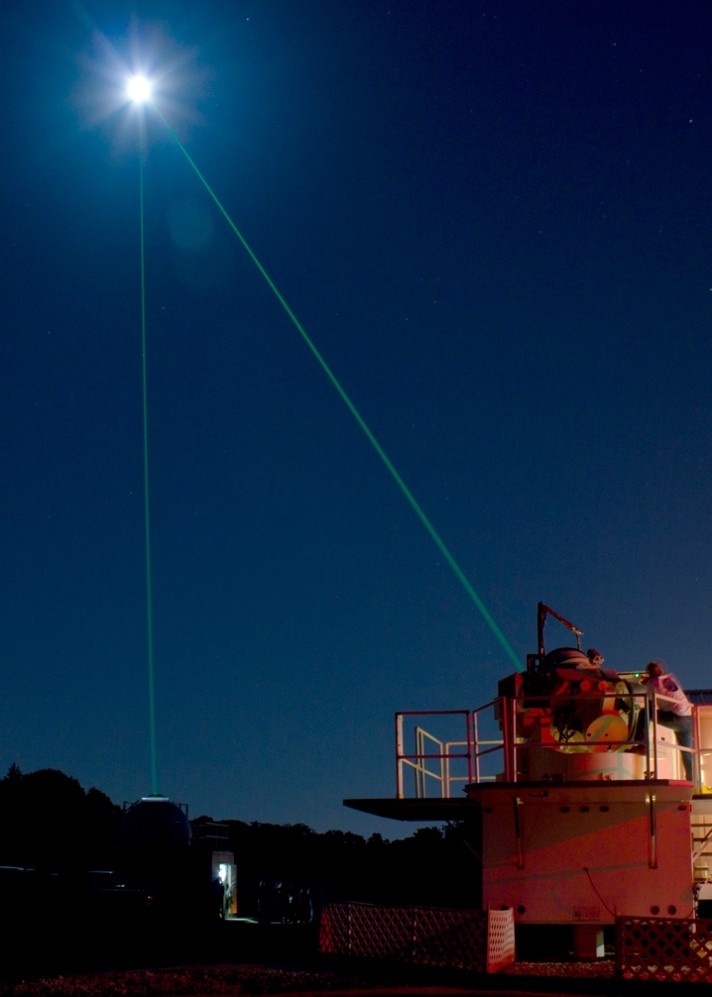
These experiments captured the imagination of scientists and engineers alike. Light was no longer just something used for illumination or communication – it had become a precision sensing technology.
Why LiDAR offered something radar could not
Before LiDAR, radar systems already existed and were widely used for detection and ranging applications. Radar remains incredibly important today, but lasers introduced a major advantage: wavelength.
Radar systems operate using relatively long wavelengths, which means large antennas are required to produce narrow, highly focused beams. LiDAR systems, by comparison, use light wavelengths that are orders of magnitude shorter. This allows laser beams to be focused far more precisely using comparatively small optics.
The result is much higher angular precision and spatial resolution.
This capability proved extremely valuable for applications requiring accurate mapping and measurement, including surveying, terrain modeling, and industrial scanning.
The rise of laser surveying and scanning systems
As laser ranging technology matured, industries began exploring practical commercial applications.
Surveying became one of the earliest major adoption areas. Traditional surveying methods could now be enhanced using laser-based distance measurements, improving both speed and accuracy.
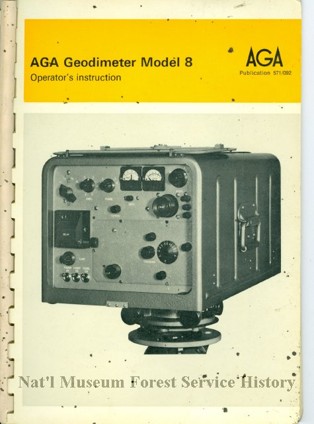
Over time, scanning systems evolved that could steer laser beams across entire environments. Instead of measuring a single point, these systems generated dense collections of spatial data known as point clouds.
This marked a major shift in LiDAR capability.
LiDAR was no longer just a distance measurement tool. It had become a way to digitally reconstruct the physical world in three dimensions.
These early systems were often large, expensive, and specialized, but they laid the groundwork for many of the applications we now take for granted.
Miniaturization changed everything
One of the biggest transformations in LiDAR came from miniaturization.
Early laser ranging and scanning systems were often extremely large, expensive, and highly specialized. Many were vehicle-mounted, permanently installed, or required dedicated operators and significant supporting equipment. While these systems delivered impressive measurement capability for their time, their size and complexity limited where and how they could be deployed.
Advances in optics, semiconductors, detectors, embedded processing, timing electronics, and manufacturing gradually changed that.
As LiDAR systems became smaller, lighter, more power efficient, and more affordable, entirely new applications began to emerge. Technologies that were once confined to laboratories, survey teams, and large industrial systems could now be integrated into compact autonomous platforms operating in real-world environments.
This transition helped accelerate the adoption of LiDAR across:
- UAVs and drones
- Robotics
- Industrial automation
- Terrain following and altitude sensing
- Collision avoidance systems
- Smart infrastructure
- Volumetric measurement systems
- Autonomous and semi-autonomous platforms
As autonomous platforms became smaller and more power constrained, traditional LiDAR systems were often too large, too heavy, or too power intensive for practical deployment. This created the need for compact laser sensing systems capable of delivering reliable real-world performance while operating within strict SWaP constraints (size, weight, and power).
Over the past decade, continued advances in miniaturization have made it possible to integrate high-performance LiDAR sensing into platforms that would previously not have been able to support laser-based ranging technology at all.
At LightWare LiDAR, miniaturization has been one of the core focuses driving the development of modern microLiDAR® systems.
Today, compact microLiDAR® systems are used across a wide range of industries and applications, including:
- UAV altitude control and terrain following
- Obstacle detection and collision avoidance
- Robotics and autonomous navigation
- Industrial automation and monitoring
- Surveying and mapping
- Stockpile and volumetric measurement
- Security and defense applications
The evolution of LiDAR has not only been about improving performance. It has also been about making advanced sensing technology smaller, lighter, more accessible, and easier to integrate into real-world systems.
LiDAR in modern autonomy
The rapid growth of autonomy over the past decade accelerated LiDAR adoption even further.
Autonomous systems require accurate environmental awareness, reliable distance measurement, and real-world sensing performance in changing conditions. LiDAR became one of the enabling technologies helping machines better understand and interact with their surroundings.
As sensing systems evolved, the focus shifted beyond simply measuring distance. Modern autonomous platforms increasingly depend on compact, lightweight sensors that can operate reliably within demanding environmental and integration constraints.
This has driven continued innovation in compact sensing technologies, particularly in industries such as UAVs, robotics, industrial automation, and defense, where SWaP constraints remain critical design considerations.
The real evolution of LiDAR
The evolution of LiDAR was never simply about inventing a laser.
The underlying physics has existed for decades. What changed over time was the ability to apply that physics to real-world problems at commercially viable size, cost, reliability, and performance levels.
In many ways, the growth of LiDAR reflects the intersection of physics, engineering, manufacturing, and practical problem solving.
The technology itself did not suddenly appear. Instead, industries gradually discovered new ways to use light as a sensing tool – and modern LiDAR continues to evolve as those applications grow.
From moon-ranging experiments and early surveying instruments to modern compact microLiDAR® systems measured in grams rather than kilograms, the evolution of LiDAR reflects decades of continuous innovation in optics, electronics, sensing, and engineering integration.
This article was inspired by a Light Conversations discussion on the evolution of LiDAR technology:

Blog written by
Nadia Nilsen
Nadia is the CEO and Co-Founder of LightWare. With a comprehensive background in technology and financial management, Nadia works to drive strategic growth and operational excellence through digital and structural advancements in LightWare.
Nadia has over 14 years of experience in technology and manufacturing, including significant roles at K-TEK and ABB before joining LightWare. She began her career managing the business through a final merger and acquisition at K-TEK and led the instrumentation business unit at ABB to significant growth in sales. Nadia holds an MBA from Unisa Graduate School of Business Leadership and a B.Com (Hons) in Financial Management.
“My passion lies in leveraging innovative solutions to address customer needs, fostering ground-breaking products and services that make a real difference.”
Never miss a story
Stay updated about Lightware news as it happens.