
Light Detection and Ranging (LiDAR) has come a long way from when it was first introduced and then deployed on the surface of the moon in 1969. Back then it was in the form of the lunar laser ranging retroreflector array, weighing 77-kilograms, and mounted in a 46-centimeter (18-inch) square aluminum panel. It also must have cost a pretty penny!
Fast forward to today, and the demand for LiDAR is at an all-time high. This is because of the multiple solutions that LiDAR provides for a wide range of businesses and industries – big, medium, or small. Whether your business focuses on agriculture, construction, astronomy, autonomous vehicles, conservation, or Internet of Things (IoT), LiDAR is applicable for a growing list of use-cases.
But, the rapid growth of the LiDAR industry has brought with it questions regarding its applicability, mainly in the form of size, weight, power consumption, affordability, and data retrieval. These questions need answering now, and it’s here where the future of LiDAR lies.
The fact that LiDAR can do so much makes it an essential fit for many tech-embracing businesses. So many applications across multiple industries make it the ‘in-demand’ solution for range, perception and IoT related challenges.
Why the LiDAR demand?
Here are just some of the popular applications for LiDAR that is stimulating strong demand for this laser sensor technology:
-
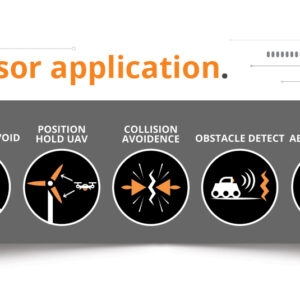
Popular LiDAR applications
Watch this space:
Look out for our next week’s edition of LiDAR Matters where we explore and unpack various LiDAR applications.
Strong competition: consumer benefit
A big pool of LiDAR manufacturers that mass produce sensors in various shapes and forms (to fit multiple applications) is a clear advantage for consumers. With so many manufacturers competing against each other in this way, industry standards tend to get blurred. This results in a consumer-win as a wide array of LiDAR solutions are sold through multiple price brackets.
Some LiDAR challenges to solve
Despite the lowering cost that competition and mass production bring, some critics believe that LiDAR technology is still too expensive to fully utilize. This is because many LiDAR manufacturers can’t scale up on production while cutting down on end-user costs. Also, being heavily reliant on the need for a small form and low power output, size and weight remains a negative issue for many consumers considering LiDAR technology.
Mass producing a small form, low-cost LiDAR sensor that will not compromise on machine mobility and its payload is tricky. It’s also important to consider low-power consumption LiDAR sensors – essential for single-trip applications. A big and bulky LiDAR is counter-productive for a machine carrying revenue-generating stock, for instance. The key in this case is creating a perfect balance between finding a small, light, and low-power LiDAR for the job, while safely stocking your machine with a profitable payload.
Another criticism is the retrieval and extractability of data collected by the LiDAR sensor. There seems to be little industry standard when it comes to data retrieval and collection tools for LiDAR. This creates a situation where LiDAR manufacturers freely customize data retrieval platforms and dashboards as required, adding to the competitiveness of the industry. Naturally, this can only benefit consumers again who are able to select an ideal solution for their data requirements; but it also adds to a state of fragmented knowledge about LiDAR’s rich data retrieval potential.
Being a global leader in LiDAR technology, LightWare engineers are driven to solve these challenges and provide solutions for its partners. LightWare’s microLiDAR™ sensor is the small form, lightweight, low power and affordable LiDAR solution:
Challenges solved: microLiDAR™
At LightWare, we’re driven to address customer needs that include size, weight, power, data, and affordability considerations. Dedicated to solving, we’ve come up with a LiDAR solution that speaks to all the above. Through an expert team of engineers, we manufacture the world’s smallest, lightest, scanning microLiDAR™ sensors.
If you’re looking for an affordable LiDAR solution that does not compromise on active work time and payload, LightWare’s microLiDAR™ is the answer! Our technology allows us to produce high quality microLiDAR™ sensors (in small and light form) at scale. LightWare also partners to offer exceptional service and expert after-sales support to ensure you get the best from your microLiDAR™ product.
Don’t forget data: LightWare Studio
The key is to have an instant, affordable, seamless plug and play data application tool that allows for an organized view of retrieved LiDAR data. It’s why LightWare engineers have created an easy LiDAR data retrieval point at a low price compared to many competitors.
LightWare Studio is a computer-based application specifically designed to collect, configure, and conveniently visualize data for your microLiDAR™. The Studio also allows for seamless firmware updates to ensure you have the latest data collection tools for your LiDAR.
Key benefits of LightWare’s microLiDAR™
- Small Form
Designed for size and weight constrained applications, LightWare microLiDAR™ sensors weigh as little as 8.8 grams and measure as small as 22 x 34 x 21 mm. This is the essential benefit that sets LightWare microLiDAR™ sensors apart from the rest!
- Cost-effective
We pride ourselves on providing world-class micro-LiDAR™ sensors at the best possible price.
- Accuracy and precision
Fast update rates of up to 20 000 measurements per second make LightWare microLiDAR™ sensors extremely precise. This accuracy is not affected by the color or texture of the surface, nor the angle of incidence of the laser beam.
- Low power consumption
Being so light and small, all microLiDAR™ sensors are designed to consume low power. This is often the essential factor for machines that need to perform at optimum over an extended (single) time.
- Seamless data retrieval
LightWare Studio is a seamless plug and play software application for your micro-LiDAR™ that allows for instant download and analysis of data in an organized dashboard view.
- Reliability
Mounted in a vertical or horizontal lens orientation, all LightWare microLiDAR™ sensors emit light at a wavelength of 905 nanometers (nm), providing an ideal balance between reliability and eye safety. Shorter wavelengths are more hazardous, whereas longer wavelengths are less reliable.
- Safety
In accordance with the international standard IEC 60825-1:2014 ‘’safety of laser products’’, all LightWare microLiDAR™ sensors are designed to Class 1M laser safety classifications.
- Plug and play connectivity
All LightWare microLiDAR™ sensors are designed for seamless ‘plug and play’ integration with flight control tools and interfaces such as Pixhawk, ArduPilot, PX4, Arduino and Raspberry Pi.
- Privacy
As data privacy and protection demands increase, LightWare microLiDAR™ sensors play an important role in that they process objects and not images. This ensures no invasion of privacy.
Available at your fingertips: the world’s smallest micro-LiDARs™
Partner with the microLiDAR™ experts
It’s more than just buying a sensor. LightWare is about being a partner for your project and to provide expert advice on microLiDAR™ solutions. We solve many technical challenges in multiple sectors and bring a different perspective on exceeding your LiDAR requirements.
LightWare engineers solve challenges
Being a global leader in LiDAR technology with over 40 years’ experience, we also offer customized and industrial microLiDAR™ solutions to meet your unique technical challenges.
Contact us on [email protected] about your microLiDAR™ requirements.