< Return to insights hub
- October 27, 2026
Quantum Systems and LightWare LiDAR: autonomous flight, anywhere
Photo credit: Quantum Systems
A drone is inbound to a landing zone no one has surveyed. There’s no prior terrain data, no known ground conditions, and no room for a second attempt.
For Quantum Systems, this is not a hypothetical – it’s exactly the kind of unstructured, GNSS-degraded environment its autonomous VTOL platforms are built to handle.
Executing that landing safely without human intervention depends on one thing: sensors the aircraft can trust completely.
As the VTOL drone market accelerates, growing at a CAGR of approximately 14.45% through 2032, that trust is becoming the industry’s defining challenge.
Without dependable environmental perception, autonomous systems default back to human oversight, capping what “autonomy” can actually mean in practice.
For Quantum Systems, closing that gap meant rethinking how its platforms sense the world around them. LightWare microLiDAR® distance sensors, including the DCMA Blue UAS-listed LW20/C, became the answer.
“LightWare stood out due to its compact form factor, proven reliability, and consistent, dependable delivery. These factors align well with our requirements for scalable and robust system integration.”
Quantum Systems at a glance
Quantum Systems is at the global forefront of autonomous system development.
The Munich-based leader in unmanned systems for land, air, and sea has redefined how data is collected, analyzed, and turned into action, future-proofing national security, governments, and companies for the age of aerial intelligence.
Products like the Vector and Reliant eVTOL platforms have drawn strong interest from operators around the world, spanning surveillance, mapping, and situational awareness missions across more than 25 countries. Both platforms are designed to be operated by small teams with minimal training, making high-quality aerial data collection accessible even in remote or resource-constrained settings.
Quantum Systems hardware is already in use by operators in the US, Ukraine, Australia, Germany, the Netherlands, Spain, the Philippines, and Romania, among others.
In mid-2026, the company boasted a valuation of some $8 billion on a post-money basis and was recently appointed a founding member of the EU-Ukraine Drone Alliance to help accelerate drone development and strengthen Europe’s defense industrial base.
The challenge: the ground-truth gap
For companies like Quantum Systems that develop autonomous drone technologies, sensing is not simply another product component, but the foundation on which safe, reliable autonomy is built.
Every automated decision, from maintaining altitude to avoiding obstacles and executing a precision landing, depends on accurate environmental data.
Any gaps in that information can reduce system confidence, increase operator intervention, and ultimately compromise ground truth sensing.
As Quantum Systems continued advancing the autonomy of its VTOL platforms, it identified several operational challenges that required a dependable sensing solution. These included:
- Reliable landing in unprepared or unknown environments where no prior terrain information was available.
- UAV collision avoidance in complex or uncertain terrain during low-level flight.
- Greater redundancy during critical low-level flight phases to ensure safe operation if other sensors experienced drift or degraded performance.
“Addressing these challenges is essential to achieving a high degree of autonomy. Reliable sensing directly enhances the safety, precision, and independence of our drones, which is fundamental to successful mission execution.” – Michael Wisbacher
The solution: LightWare microLiDAR® integration
The integration of LightWare microLiDAR® sensors into Quantum Systems’ technology delivered an exceptional operational outcome.
Landing in the unknown
LightWare’s downward-facing microLiDAR® sensors provided Quantum Systems with ground truth sensing to ensure safe, automated landings on unstructured or unprepared surfaces without prior terrain information.
This technology offers high-precision, absolute distance-to-ground measurement that corrects drift from other sensors like IMUs or barometers.
“Landing procedures, particularly in unprepared or unknown environments, and low-level flight operations have become considerably more reliable.” – Michael Wisbacher
Collision avoidance at low altitude
Because LightWare microLiDAR® sensors such as the LW20/C, a Defense Contract Management Agency (DCMA) Blue UAS-listed component, created a critical sensing layer during low-level flight phases, obstacle awareness was greatly extended in Quantum Systems’ drones.
In addition, safety margins at the flight altitudes where VTOL drones are most exposed saw significant improvement.
Redundancy and resilience
By adding LightWare microLiDAR® for VTOL drones as a dedicated ranging layer, Quantum Systems increased overall system resilience. This ensured critical flight phases were protected even when other sensors were degraded.
“The integration has added an important layer of redundancy during low-level flight phases, significantly improving safety margins and overall system resilience.” – Michael Wisbacher
Why Quantum Systems chose LightWare
Quantum Systems selected LightWare microLiDAR® for its evidence-based effectiveness as an integration technology. It offered:
- Defense-ready compliance, with the LW20/C listed as a DCMA Blue UAS component, giving confidence for operators in regulated and defense environments.
- A compact form factor, suitable for VTOL SWaP constraints.
- Proven, consistent reliability across environmental conditions.
- Dependable delivery and supply chain confidence.
- Environmental robustness, performing in various real-world conditions.
- Proactive communication around product innovation, exceeding expectations.
“Reliability and environmental robustness were the most notable characteristics. The sensors consistently performed well under varying conditions, which is critical for real-world deployments.” – Michael Wisbacher
Operational impact in the field
LightWare microLiDAR® offered effective and lasting solutions to issues Quantum Systems had struggled with. Outcomes included:
- Landing procedures in unknown or unprepared environments becoming more reliable.
- Low-level flight operations gaining an additional redundancy layer.
- Significant improvements to safety margins and system resilience.
- Confidence in the partnership being reinforced through proactive innovation communication.
“The value was particularly evident during remote landing operations, where the drone needed to land safely on unknown or unstructured surfaces without prior information.” – Michael Wisbacher
Enabling the next step toward autonomy
For Quantum Systems, autonomous flight depends on reliable sensing. As missions become more complex and drones are expected to operate with greater independence, consistent real-time altitude and terrain data become essential to safe, informed decision-making.
LightWare’s microLiDAR® provides the dependable sensing layer that supports this evolution.
Ongoing product innovation remains central to LightWare’s approach, ensuring its microLiDAR® sensors continue to meet the evolving demands of autonomous flight.
Conclusion
Landing zones with no prior terrain data were once a constraint on autonomous operation. For Quantum Systems, they no longer are.
By pairing its autonomous flight expertise with LightWare’s proven microLiDAR® technology, Quantum Systems has closed the sensing gap that once stood between automation and true independence.
“Our experience highlights the importance of selecting components that not only meet technical specifications but also perform consistently in real-world conditions, where robustness and dependability are critical.” – Michael Wisbacher
As autonomous operations continue to evolve, that principle will only matter more.
LightWare and Quantum Systems are showing what it looks like when sensing technology is trusted enough to fade into the background, freeing autonomy to do what it was designed for.
If you’re building the future of autonomous aerial operations, now is the time to integrate sensing you can depend on with LightWare microLiDAR®.
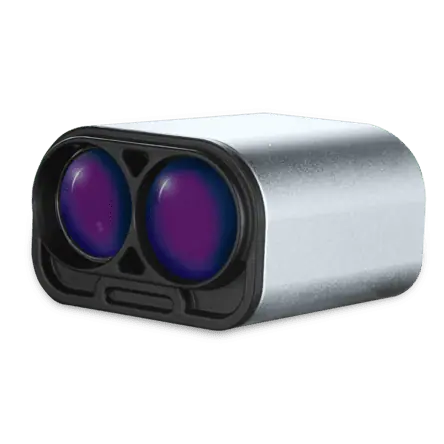
LW20/C IP67-rated 100m LiDAR sensors
The robust, easy to use, plug-and-play sensor.

The industry standard
100 meter microLiDAR
The LW20/C is the industry standard for 100 meter range capability, reliability , and ease of use.
Environmental protection
IP67 rated sensor
Dust and water-resistant for external mounting without needing additional protection.
Dust penetration
First and last pulse detection
Improved performance in difficult environmental conditions, including dust, mist, fog, rain and snow.

Blog written by
Nadia Nilsen
Nadia Nilsen is the Group CEO and Co-Founder of LightWare LiDAR, with more than two decades of experience in technology, manufacturing, finance, and business leadership. Her career spans industrial instrumentation, international business development, and high-tech manufacturing, combining strategic and commercial expertise with hands-on operational leadership.
At LightWare, she drives the group's strategic direction, international growth, and operational expansion, translating innovative technology into commercially successful products. Previous, she held senior financial and operational leadership roles at K-TEK and ABB.
Nadia holds an MBA from the University of South Africa's Graduate School of Business Leadership and a B.Com (Hons) in Financial management.
Never miss a story
Stay updated about LightWare news as it happens.